
Malibu, California · Dental sleep medicine

TMJ and sleep apnea: the connection

A sore jaw and broken sleep turn up together far more often than chance would suggest — and each can imitate the other. This guide covers what actually links them, how a dentist screens for both, and where treatment honestly starts. Reviewed by Dr. Robert Perkins, DDS.

  • Free consultation, no obligation
  • Office responds within the hour
  • Joint and airway screened in one visit

Reviewed by Dr. Robert Perkins, DDS — Dental sleep medicine · Invisalign-certified provider · Malibu practice

Free · No obligation

Start my sleep consult

Takes about 30 seconds. The practice — never a call center — follows up personally.

Private and secure — your request goes directly to the Malibu practice.

Request received

Thank you — the office will reach out shortly, typically within the hour.

Content reviewed by Dr. Robert Perkins, DDS

Dental sleep medicine practice

Invisalign-certified provider

Malibu, California

The short answer

What is the connection between TMJ and sleep apnea?

What is the connection between TMJ and sleep apnea? They share anatomy, symptoms, and often the same patient. The jaw joint and the airway sit in the same small space, so clenching, jaw position, and a collapsing airway influence one another. TMJ disorders and obstructive sleep apnea are associated — not one caused by the other — which is why both get screened together rather than treated in isolation.

The practical version matters more than the mechanism. People arrive with a jaw that aches on waking, or with a partner who describes gasping at night, and rarely with both complaints organised. The National Institute of Dental and Craniofacial Research's overview of TMJ disorders describes a set of conditions rather than a single one — muscle pain, joint pain, and the clicking and locking that go with them. Sleep apnea is described the same way: a spectrum of breathing disturbance, measured and graded rather than simply present or absent. Two spectrum conditions, the same few centimetres of anatomy.

  • The jaw joint and the airway are neighbours — position changes both
  • Association, not causation: neither one proves the other
  • Sleep apnea is diagnosed by a physician; the jaw belongs to the dentist
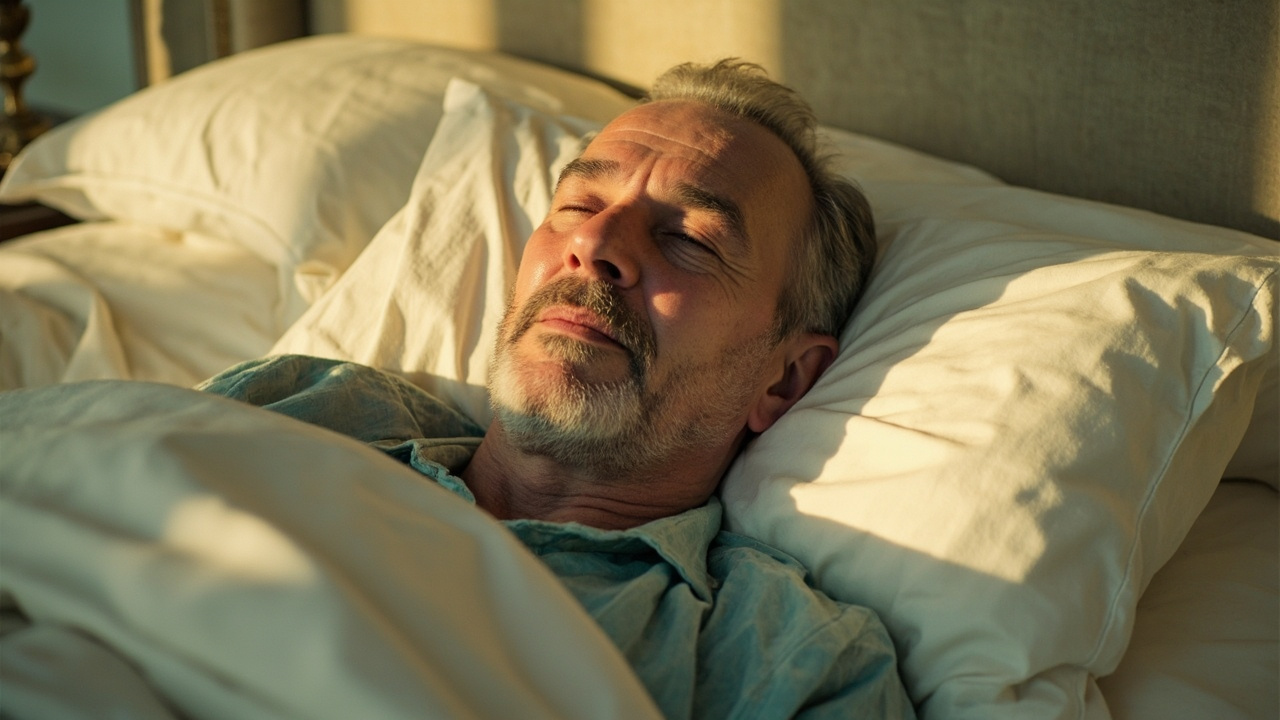
A calm night's sleep — the outcome dental sleep medicine is planned for
One joint, one airway

Our take

A jaw that aches and a night that never deepens are usually described as two complaints. Between the joint and the airway, they are often one conversation.

Malibu Dental Match, on treating two problems as one

The mechanics

Why do the two travel together?

Why do TMJ disorders and sleep apnea overlap? Because the jaw, the tongue, and the airway work as one mechanical system. A jaw that sits back narrows the space behind the tongue; a night spent clenching loads the joint. Neither is proof of the other — but each makes the other more likely, so they are assessed together, in the same examination.

That is also why a night guard bought online is an incomplete answer. It can protect the surfaces of the teeth, and that is worth something. It does nothing about the airway, and it doesn't ask why the grinding is happening — which is the question this examination starts with.

The same small space

The temporomandibular joint, the tongue, and the airway share a few centimetres of anatomy. A jaw that sits back reduces the room behind the tongue, and a narrower airway is exactly what makes obstructive sleep apnea possible. Change one position and you have changed the other.

Grinding as a night-time clue

Bruxism — the clenching and grinding that loads the joint — is common in people with disrupted breathing. Teeth worn flat, a tired jaw on waking, and a partner who mentions noise are all reasons to ask about the airway rather than ordering a night guard and stopping there.

Symptoms that don't announce their origin

Morning headache, jaw ache, ear pressure, a stuffy nose, and daytime fatigue can belong to either problem. That overlap is why a dentist examines the joint and the airway in the same visit instead of treating whichever symptom was mentioned first.

Clenching is the bridge between the two. The Sleep Foundation's overview of bruxism treats grinding as a sleep-related behaviour rather than a daytime habit, which matches what the wear patterns on the teeth tend to show. Where the jaw is being loaded every night, a snoring and jaw-clenching assessment belongs in the same appointment as the airway screen.

Telling them apart

Which one is it — and does it matter?

How do you tell the two apart? By pattern, not by a single symptom. Jaw symptoms cluster around use, eating, and waking; breathing symptoms cluster around sleep and are usually reported by someone else in the room. Because the overlap is real, the reliable answer comes from examining both in the same appointment rather than from reading one list.

It matters for a specific reason. A treatment aimed at the wrong one is the commonest way to spend a year with a problem that doesn't move: a night guard for an airway that needed a sleep study, or a jaw that never settled because the clenching was never addressed. The table below is a starting point for the conversation, not a diagnosis.

The usual waking symptom

More typical of a TMJ disorder — Jaw ache, facial pain, a click or a feeling of the jaw catching, sometimes ear pain or pressure.

More typical of sleep apnea — Unrefreshing sleep, a dry mouth or sore throat, headache, and sleepiness that follows you into the afternoon.

When it shows up

More typical of a TMJ disorder — Through the day — worse with chewing, yawning, wide opening, or a long conversation.

More typical of sleep apnea — At night, most obviously while you are asleep and can't observe it yourself.

What it sounds like (to someone else)

More typical of a TMJ disorder — Grinding and clenching that a partner may notice before you do.

More typical of sleep apnea — Loud snoring, gasping, snorting, or long pauses in breathing that resume with a jolt.

What tends to make it worse

More typical of a TMJ disorder — Stress, prolonged clenching, chewing hard foods, and sleeping position.

More typical of sleep apnea — Sleeping on your back, nasal blockage, alcohol in the evening, and some medications.

What a dentist checks first

More typical of a TMJ disorder — Joint movement and tenderness, the way the teeth meet, and how the jaw tracks when it opens.

More typical of sleep apnea — The airway, the tongue's position, the size of the tonsils, and the pattern of wear on the teeth.

Where the two meet

More typical of a TMJ disorder — Neither is diagnosed by a single symptom, and one can be hidden inside the other. That is the point: they are screened for together.

More typical of sleep apnea — Sleep apnea is diagnosed by a physician, and treatment of the joint belongs to the dentist. The two conversations run in parallel.

Where the airway is the primary question, the comparison of CPAP and oral appliance therapy covers what each option actually involves, and the candidacy guide covers who tends to be well suited to an appliance. The American Academy of Dental Sleep Medicine's explanation of oral appliance therapy is a fair description of the treatment a dentist provides — and of the boundary: the diagnosis is the physician's.

The process

What happens at the appointment, step by step?

What are the stages? Four, in order: a short symptom screen, an examination of the joint and the airway, a sleep study where the history points that way, and treatment — an oral appliance, joint therapy, or both. Nothing is fitted before the joint has been assessed, because appliance therapy itself changes jaw position — and that order is deliberate.

  1. A short screen, before anything is decided

    The consultation opens with questions about snoring, breathing at night, morning symptoms, and jaw pain. Sleep apnea and TMJ disorders are both symptom-led, so the history does most of the preliminary work.

  2. An exam that covers both joints and airway

    The examination records how the jaw moves, where it is tender, how the teeth meet, and what the airway looks like behind the tongue. Wear patterns on the teeth are read as evidence of what happens at night.

  3. A sleep study, read by a physician

    Only a physician diagnoses obstructive sleep apnea, and a home or in-lab sleep study is how it is confirmed. Where symptoms point that way, the practice says so and coordinates the referral. That is the honest order.

  4. Treatment, with the joint checked along the way

    Where an oral appliance is fitted for mild-to-moderate obstructive sleep apnea, the jaw position changes — so the joint is assessed before fitting and reviewed after. If a joint flares, the appliance is adjusted rather than abandoned.

The reassurance sits in the order of the work. You are not asked to accept an appliance and hope: the joint is examined first, the airway findings are handed to the physician who can act on them, and the appliance is adjusted against your comfort rather than against a delivery date. Where a sleep study is the next step, the National Heart, Lung, and Blood Institute's overview of sleep apnea treatment describes what the physician is working with — CPAP, appliances, and the surgical options that a dentist does not provide.

Aligners and the airway

Do clear aligners help sleep apnea?

Do aligners treat sleep apnea? No. Clear aligners move teeth — they do not hold the airway open and are not a treatment for obstructive sleep apnea. An oral appliance does that job by holding the jaw forward during sleep. The two are sometimes used in the same plan, but they are not substitutes for one another.

The distinction is worth holding on to, because the two devices are easy to confuse: both are custom-made, removable, and worn in the mouth. Invisalign® treatment is orthodontic — it straightens teeth, and it is planned and finished around your bite. An oral appliance is a sleep device, made for the airway. Where orthodontic work is already part of the plan, the Invisalign treatment guide for Malibu covers the orthodontic side, and the sleep side is planned separately — with the joint position in mind, since both devices ask the jaw to sit somewhere specific.

  • Aligners straighten teeth; a sleep appliance holds the airway open — different jobs
  • Neither one replaces a sleep study where sleep apnea is suspected
  • Where both are planned, the jaw's position is coordinated between them

Answers, plainly

TMJ and sleep apnea questions

The questions that come up when a jaw and a night's sleep are discussed in the same appointment.

Reviewed by Dr. Robert Perkins, DDS

Dental sleep medicine · Invisalign-certified provider · Malibu practice


Where relevant, this page references guidance from the American Dental Association, the American Academy of Dental Sleep Medicine, the American Sleep Apnea Association, and the Sleep Foundation.

Can a TMJ disorder cause sleep apnea?

There is no established cause-and-effect in that direction. What the research supports is an association: people with temporomandibular disorders report sleep problems, snoring, and sleep apnea symptoms more often than the general population, and the two conditions share anatomy. It is more useful to think of them as two problems that keep company between the same jaw, tongue, and airway than as one problem causing the other.

Can sleep apnea make jaw pain worse?

It can, indirectly. Disrupted breathing at night is associated with more clenching and grinding, and that is what loads the temporomandibular joint — so a jaw that is sore through the day can be reflecting a night where neither the airway nor the muscles ever fully settled. Treating only the pain, without asking why the clenching happens, is the common reason it comes back.

Does an oral appliance for sleep apnea make TMJ problems worse?

It can change the jaw's position, which is why the joint is examined first. For many people an oral appliance is comfortable; for some, jaw discomfort or a shift in the bite appears and is managed by adjusting the appliance rather than stopping treatment. Where a temporomandibular disorder is already active, it is addressed as part of the plan — not discovered after the appliance is delivered.

How does a dentist screen for sleep apnea?

By history and examination, not by diagnosis. The dentist asks about snoring, gasping, breathing pauses, morning headaches, and daytime sleepiness, then looks at the airway, the tongue, and the wear on your teeth. A positive screen is a reason to see a physician for a sleep study — which is the only way obstructive sleep apnea is actually confirmed.

Should I see a dentist or a doctor first for jaw pain and snoring?

Either one can be a fair starting point, and both may end up involved. A physician diagnoses and manages sleep apnea, including CPAP or a surgical opinion; a dentist examines the joint, the bite, and the teeth, and — where it fits — provides a custom-fit oral appliance and addresses clenching and wear. If both sets of symptoms are present, saying so at either appointment is what gets the two lines of care connected.

Ready when you are

Jaw pain and broken sleep deserve one honest conversation

One short form — the office calls you, typically within the hour — and the free consultation covers what is joint-related, what is airway-related, and which of the two needs attention first.

Free · No obligation

Request my sleep consult

Takes about 30 seconds. The practice — never a call center — follows up personally.

Private and secure — your request goes directly to the Malibu practice.

Request received

Thank you — the office will reach out shortly, typically within the hour.

Request My Free Consultation